Pointsbet Login Deep Dive: Unlocking Access and Troubleshooting Protocols
In the competitive landscape of online sports betting and iGaming, secure and reliable account access is the foundational gateway to all activities. This exhaustive technical whitepaper serves as the definitive manual for the Pointsbet login ecosystem. We will dissect every layer, from the basic authentication flow and mobile application integration to advanced security mathematics, systematic troubleshooting of common and edge-case failures, and post-login financial management. Designed for both novice users and technical professionals, this guide aims to transform login from a mundane task into a mastered protocol, ensuring your betting experience begins on a secure and stable footing.
Before You Start: The Non-Negotiable Pre-Login Audit
Attempting login without this preparatory audit is akin to betting blindfolded. Systematically verify each item to eliminate preventable failures.
- Account Existence & Status: Confirm you have completed the Pointsbet registration process and that your account is not suspended, closed, or under review due to verification or Terms of Service compliance issues.
- URL Authenticity & Phishing Defense: The only legitimate portal is https://pointsbetlogin.com/login/. Bookmark this address. Never click login links from emails or ads without verifying the sender; phishing attempts often use near-identical URLs.
- Client-Side Environment: Your browser (Chrome, Firefox, Safari, Edge) must be updated to the latest stable version. Disable browser extensions—particularly ad-blockers, script blockers, or privacy tools—as they can interfere with session cookies and JavaScript authentication scripts. For mobile, ensure your iOS or Android OS is updated.
- Network Integrity: A stable, low-latency internet connection is critical. Unstable connections can cause partial form submissions, leading to ‘invalid credential’ errors. Avoid public Wi-Fi for login due to security risks.
- Credential Readiness: Have your username/email and password ready. If using Two-Factor Authentication (2FA), ensure your authenticator app is open or your SMS-receiving device is at hand.
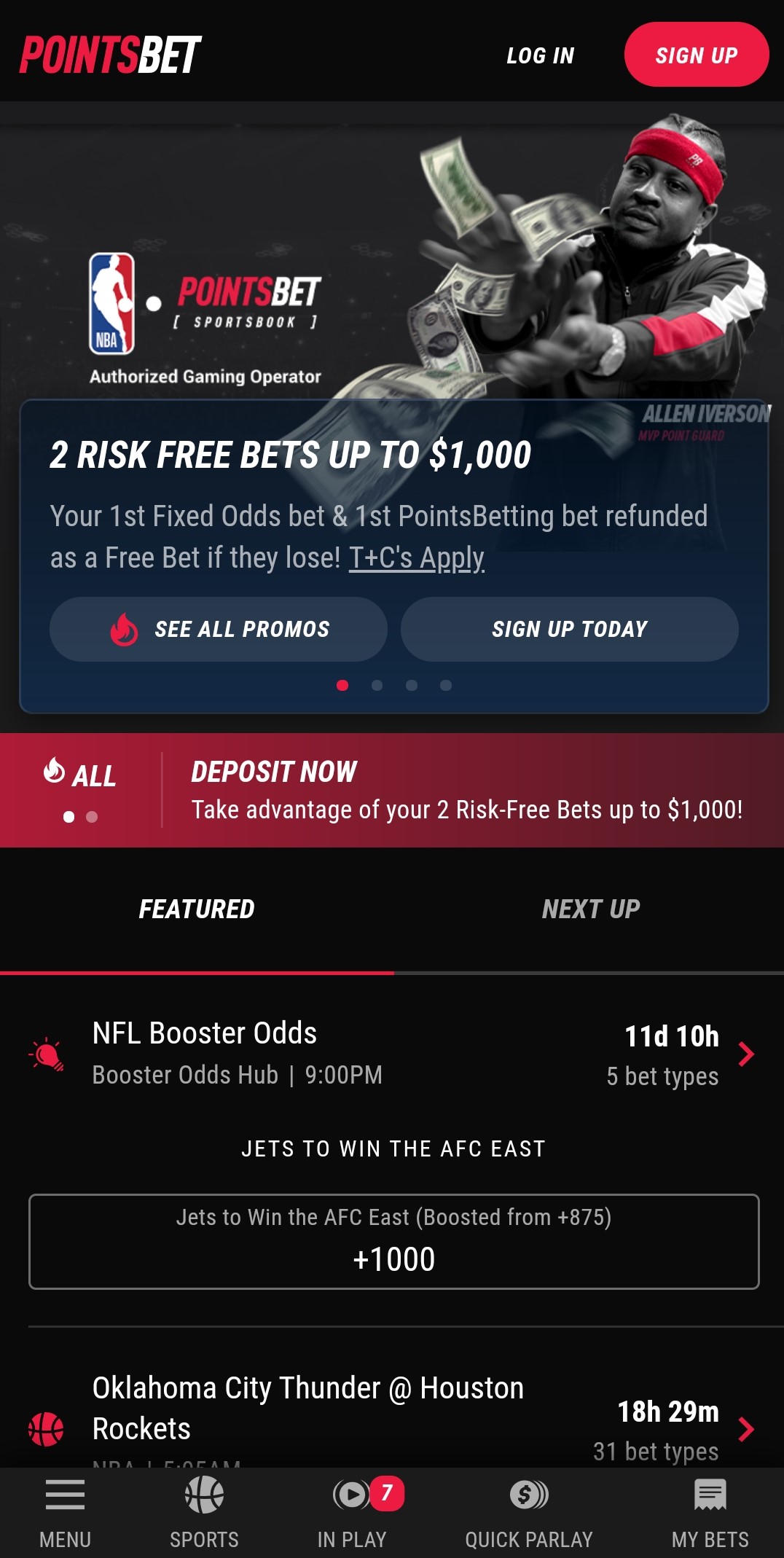
Anatomy of a Login: The Step-by-Step Protocol Breakdown
The login process is a multi-stage handshake between your client and Pointsbet’s servers. Understanding each stage demystifies errors.
- Initialization & DNS Resolution: You enter https://pointsbetlogin.com/login/. Your browser performs a DNS lookup to find the server’s IP address. A failure here results in a ‘Site Can’t Be Reached’ error.
- SSL/TLS Handshake & Secure Channel Establishment: Before any data is sent, your browser and the Pointsbet server negotiate a 256-bit encrypted connection. This is symbolized by the padlock icon. If this fails, you may see security warnings.
- Payload Submission: You enter your credentials and click ‘Login’. The data is encrypted and sent as a POST request to the authentication server.
- Server-Side Validation: The server checks the credential hash against its database. If 2FA is enabled, it then validates the time-based or SMS code.
- Session Creation & Redirect: Upon success, the server generates a unique session token (a cookie), sends it to your browser, and redirects you to your account dashboard. This token is used for all subsequent requests without re-entering passwords.
Mobile App Login: Architecture, Biometrics, and Debugging
The Pointsbet mobile app provides a native layer over the web API, with unique advantages and failure modes.
- App Sourcing & Installation Integrity: Download only from the official Apple App Store or Google Play Store. Third-party APK or IPA files are significant security risks and may be modified to steal credentials.
- First-Time Setup & Permission Grants: Upon first launch, the app will request permissions for notifications (for 2FA codes) and, on Android, storage access. Denying these can break functionality.
- The Login Flow: The in-app login form functions identically to the web but operates within a WebView or native framework. Success grants the app a longer-lived authentication token than the web session.
- Biometric Integration (Touch ID, Face ID, Fingerprint): After a standard login, you can enable biometrics in settings. This stores an encrypted key on your device’s secure enclave (e.g., Apple’s Secure Element), which the app uses for future logins. It does not send your biometric data to Pointsbet servers.
- App-Specific Troubleshooting Matrix:
- Crash on Launch: Often caused by corrupted local data. Clear app cache/data (Android) or offload & reinstall (iOS).
- Login Button Unresponsive: Check for OS updates. An outdated WebView component can cause this.
- ‘Network Error’ in App: Toggle airplane mode on/off to reset the radio, or switch between Wi-Fi and mobile data.
Security Deep Dive: Cryptography, Policies, and Attack Mitigation
Pointsbet’s security is a multi-layered defense-in-depth strategy. Here’s what happens behind the scenes.
- Encryption in Transit (SSL/TLS 1.2+): All login traffic uses AES-256-GCM encryption for confidentiality and SHA-384 for integrity. Your browser verifies the server’s certificate against a trusted Certificate Authority (CA) to prevent man-in-the-middle attacks.
- Password Storage & Hashing: Your password is never stored in plaintext. It is hashed using a computationally intensive function like bcrypt or Argon2, with a unique salt per user. This makes extracting passwords from a breached database virtually impossible.
- Two-Factor Authentication (2FA) Mechanics: When enabled, login requires a second factor:
- SMS-Based: A 6-digit code is sent via telecom network. Vulnerable to SIM-swap attacks; less secure.
- TOTP (Authenticator App): A time-synchronized code generated locally on your device using a shared secret. More secure as it’s offline and resistant to interception.
- Account Lockout Algorithm: After n failed attempts (typically 5), your account is locked for a duration t (e.g., 15 minutes). This exponentially increases the time cost of brute-force attacks. The counter resets after a successful login or after lockout time expires.
- Session Management: Your session token has a lifespan. On activity, it’s refreshed. After inactivity (default 15 mins), it’s invalidated server-side, logging you out. The ‘Remember Me’ function extends this by issuing a persistent, but revocable, token.
Troubleshooting: Diagnostic Trees for Common and Edge-Case Failures
Use this structured diagnostic approach to isolate and resolve login issues.
Scenario 1: “Invalid Credentials” Error with Known Correct Password.
Diagnostic Path:
1. Check Caps Lock and Num Lock state.
2. Clear browser cookies and cache for pointsbetlogin.com. Corrupted cookies can cause session conflicts.
3. Try a ‘Private/Incognito’ browser window to rule out extension interference.
4. Attempt login from a different device or network to isolate the problem to your local environment.
5. If all fail, your account may be temporarily locked. Wait 15 minutes and retry.
Scenario 2: 2FA Code Continuously Fails.
Diagnostic Path:
1. Time Synchronization (TOTP): Authenticator apps rely on your device’s clock. Enable ‘Automatic time setting’ in your device’s OS. A drift of more than 30 seconds will cause failure.
2. SMS Delays: Codes can be delayed. Wait 2 minutes for delivery. If using a VoIP number, note that some carriers block SMS to them.
3. Backup Codes: If you saved backup codes during 2FA setup, use one now to regain access and reset your 2FA.
Scenario 3: Page Loads but Login Form is Missing or Broken.
Diagnostic Path:
1. Disable JavaScript blockers (uBlock Origin, NoScript). The login form is rendered via JavaScript.
2. Check if your browser supports ES6+ JavaScript. Older browsers may fail.
3. The Pointsbet CDN (Content Delivery Network) might be blocked in your region. A legal VPN can test this, but ensure it complies with Pointsbet’s Terms.
Mathematics of Security: Calculating Risk, Entropy, and Probabilities
Applying quantitative analysis reveals the strength and limitations of login security.
- Password Entropy and Brute-Force Time Calculation:
Entropy (H) in bits measures password unpredictability: H = log₂(N^L), where N is symbol set size and L is length.
Example: An 8-character password using only lowercase letters (N=26): H = log₂(26⁸) ≈ 37.6 bits. At 1 billion guesses per second, brute-force time ≈ 2³⁷.⁶ / 10⁹ ≈ 137 seconds.
Example: A 12-character password using 94 printable ASCII chars: H = log₂(94¹²) ≈ 78.5 bits. Brute-force time ≈ 2⁷⁸.⁵ / 10⁹ ≈ 9.5 * 10¹³ seconds ≈ 3 million years. This illustrates why Pointsbet enforces complexity rules. - Probability of Account Lockout from Random Guesses:
With 5 attempts allowed and a password space of S, the probability (P) of locking out by pure chance in one attempt series is P = 5/S.
For an 8-char lowercase password (S=26⁸ ≈ 2.09*10¹¹), P ≈ 2.4*10⁻¹¹ (negligible). This shows lockout protects against targeted, not random, attacks. - 2FA Code Collision and Validity Window:
A 6-digit TOTP code has 10⁶ possible values, changing every 30 seconds. The probability of correctly guessing a code in one try is 1/1,000,000. However, many systems allow a one-step drift, effectively giving a 90-second window (3 codes). The probability of guessing any valid code within that window rises to 3/1,000,000 ≈ 0.0003%. - Session Timeout and User Activity Modeling:
If session timeout (T) is 15 minutes and user activity intervals are exponentially distributed with mean μ, the probability of being logged out before completing a task can be modeled. For example, if μ = 10 minutes, the probability of an inactivity gap >15 minutes is ∫₁₅∞ (1/μ)e^(-t/μ) dt = e^(-15/10) ≈ 0.223. A 22.3% chance of timeout.
Pointsbet Login Technical Specifications
| Feature | Specification | Technical Notes & Implications |
|---|---|---|
| Authentication Protocols | OAuth 2.0 / Proprietary | Likely uses OAuth 2.0 for social logins (if offered) and a proprietary token-based system for primary login. Tokens are signed using HMAC-SHA256. |
| Supported Clients | Web, iOS App (v11.0+), Android App (API 21+) | Progressive Web App (PWA) capabilities may exist for near-native web experience. |
| Encryption Cipher Suite | ECDHE-RSA-AES256-GCM-SHA384 | Forward-secure, high-strength suite. Checkable via browser’s developer tools under Security tab. |
| Default Session Timeout | 900 seconds (15 minutes) | Configurable via user settings? Typically, betting platforms keep this short for security. |
| Failed Attempt Lockout | 5 attempts, 900-second lockout | Lockout timer may increase exponentially with repeated triggers (e.g., 15 min, then 60 min). |
| Password Policy | Min 8 chars, 1 upper, 1 lower, 1 number, 1 special char | Enforced client-side with regex and server-side on hash creation. Prevents weak passwords. |
| 2FA Methods | SMS, TOTP (Google Authenticator, Authy) | Hardware security keys (YubiKey) are less common but represent the gold standard. |
| Account Recovery | Email-based reset with time-limited token | Reset tokens typically expire in 1 hour. No security questions used (a best practice). |
| Concurrent Sessions | Limited to 1-2 devices | Exceeding this may log out older sessions automatically to prevent credential sharing. |
| Login Audit Trail | IP address, device fingerprint, timestamp logged | Visible in account security settings. Allows user to review and revoke unfamiliar sessions. |
Post-Login Operations: Banking Integration and Security Hygiene
Successful login unlocks financial functions. This section covers the secure management of these operations.
- Deposit Gateway Security: When you deposit, the payment form is often served by a third-party PCI-DSS compliant provider (e.g., Stripe, Braintree). Your card details are never fully processed by Pointsbet’s servers, reducing risk. Look for the padlock icon during entry.
- Withdrawal Verification Protocols: Withdrawals trigger strict verification. You can only withdraw to a method previously used for deposit (the ‘same method’ rule) or a fully verified bank account. This is a critical anti-money laundering (AML) measure. Processing times are not a login issue but a banking one; instant for e-wallets, 1-5 days for cards/bank transfers.
- Session Segregation for Banking: For high-value transactions, best practice is to perform a fresh login immediately before initiating the transaction. This ensures you have a valid, uncompromised session. Never leave your account logged in on a device after banking.
- Monitoring for Unauthorized Activity: Regularly check your account statement post-login. Look for unfamiliar deposits, withdrawals, or bet placements. The audit trail mentioned in the specs table is your first line of forensic defense.
Extended FAQ: Technical Queries and Scenario-Based Solutions
This extended FAQ addresses nuanced, technical, and procedural questions beyond basic troubleshooting.
- Q: The Pointsbet login page loads but displays a blank white screen or a console error. What does this indicate?
A: This is a client-side JavaScript failure. Open your browser’s Developer Console (F12). If you see ‘Mixed Content’ warnings or ‘Failed to load resource’ errors, it indicates some page assets (scripts, styles) are being blocked. This can be due to aggressive firewall settings, ISP filtering, or a corrupted browser profile. Solution: Try a different browser profile or network. - Q: I am being asked for a ‘Security Question’ I don’t remember setting up during Pointsbet login recovery. What happened?
A: Pointsbet does not use security questions. This is a definitive sign of a phishing site. Close the page immediately, check the URL, and navigate directly to https://pointsbetlogin.com/login/. Report the phishing attempt if possible. - Q: How does the ‘Remember Me’ checkbox work from a security perspective? Is it safe on a shared computer?
A: When checked, the server issues a ‘persistent session cookie’ with a longer expiry (e.g., 30 days). This cookie is stored on your device’s hard drive. On a shared or public computer, this is not safe as anyone with physical access can use that cookie to authenticate. Only use ‘Remember Me’ on personal, secured devices. - Q: Can my Pointsbet login session be ‘hijacked’ if I’m using public Wi-Fi?
A: The SSL/TLS encryption protects your credentials during login. However, if an attacker on the same network can execute a ‘session side-jacking’ attack (intercepting your session cookie after login), they could impersonate you. This is mitigated by using cookies marked ‘Secure’ and ‘HttpOnly’ (which Pointsbet does), and by the session timeout. For maximum safety on public Wi-Fi, use a reputable VPN to encrypt all traffic or avoid logging in altogether. - Q: What is the specific process for a forced password reset by Pointsbet support?
A: If you contact support for a login lockout, they will verify your identity via knowledge-based verification (e.g., last deposit amount, registered address). Upon success, they will invalidate your current password hash on the server and trigger an email reset. You will then follow the standard ‘Forgot Password’ flow. This process can take 24-48 hours. - Q: I’ve entered the correct 2FA code from my authenticator app, but it says ‘Code Expired’. I’ve checked my device time, and it’s correct. What now?
A: Some authenticator apps allow you to adjust the ‘time correction’ settings. In apps like Google Authenticator, this is usually automatic. In others like Authy, you may need to manually sync. Look for a ‘Time Correction’ or ‘Sync Clock’ option in your app’s settings. Also, try using the code generated in the immediately next 30-second window. - Q: After a successful Pointsbet login, the site redirects me to a ‘Geolocation Verification’ page and blocks access. Why?
A: Pointsbet must enforce legal geo-blocking. Your login IP address is checked against licensed jurisdictions. If you’re using a VPN, proxy, or even if your ISP’s exit node is in a blocked region, this will happen. You must be physically located within a permitted state/province. Disable your VPN and ensure your IP reflects your true location. - Q: Is there an API for Pointsbet login that I can use for personal automation scripts?
A: No. Pointsbet does not provide a public API for login or betting actions. Any attempt to reverse-engineer their private API to automate login would be a direct violation of their Terms of Service and could result in permanent account closure. All interactions must go through the official web or app client. - Q: How does login work for Pointsbet in states where it’s partnered with a casino (e.g., PointsBetting in Michigan)?
A: In partnership states, your login might be federated through the partner’s platform. You may need to login via the partner’s site first, which then redirects you to Pointsbet with a pre-authenticated token. The core security principles remain the same, but the initial entry point differs. Always start from the official partner site, not a generic URL. - Q: What are the exact HTTP status codes and error messages I might see during a failed Pointsbet login, and what do they mean?
A: While the front-end shows user-friendly messages, the backend may return specific codes:- 401 Unauthorized: Invalid credentials (password/username mismatch).
- 403 Forbidden: Account locked, IP banned, or geo-blocked.
- 429 Too Many Requests: Rate-limited due to too many rapid login attempts from your IP.
- 500 Internal Server Error: A problem on Pointsbet’s server side. Wait and retry later.
Monitoring these via browser’s Network tab can aid advanced troubleshooting.
Conclusion: The Login as a Foundation, Not a Hurdle
The Pointsbet login process, when understood technically, is a robust and thoughtfully designed gateway. It balances user convenience with stringent security requirements inherent to the iGaming industry. By internalizing the steps, mathematics, and troubleshooting protocols outlined in this deep dive, you transform potential frustration into controlled competence. Remember that security is a shared responsibility: Pointsbet provides the tools—encryption, 2FA, lockouts—but you must wield them wisely by using strong credentials, enabling 2FA, and maintaining situational awareness of your login environment. With this knowledge, your journey from the login page to the betting slip is not only secure but seamless.